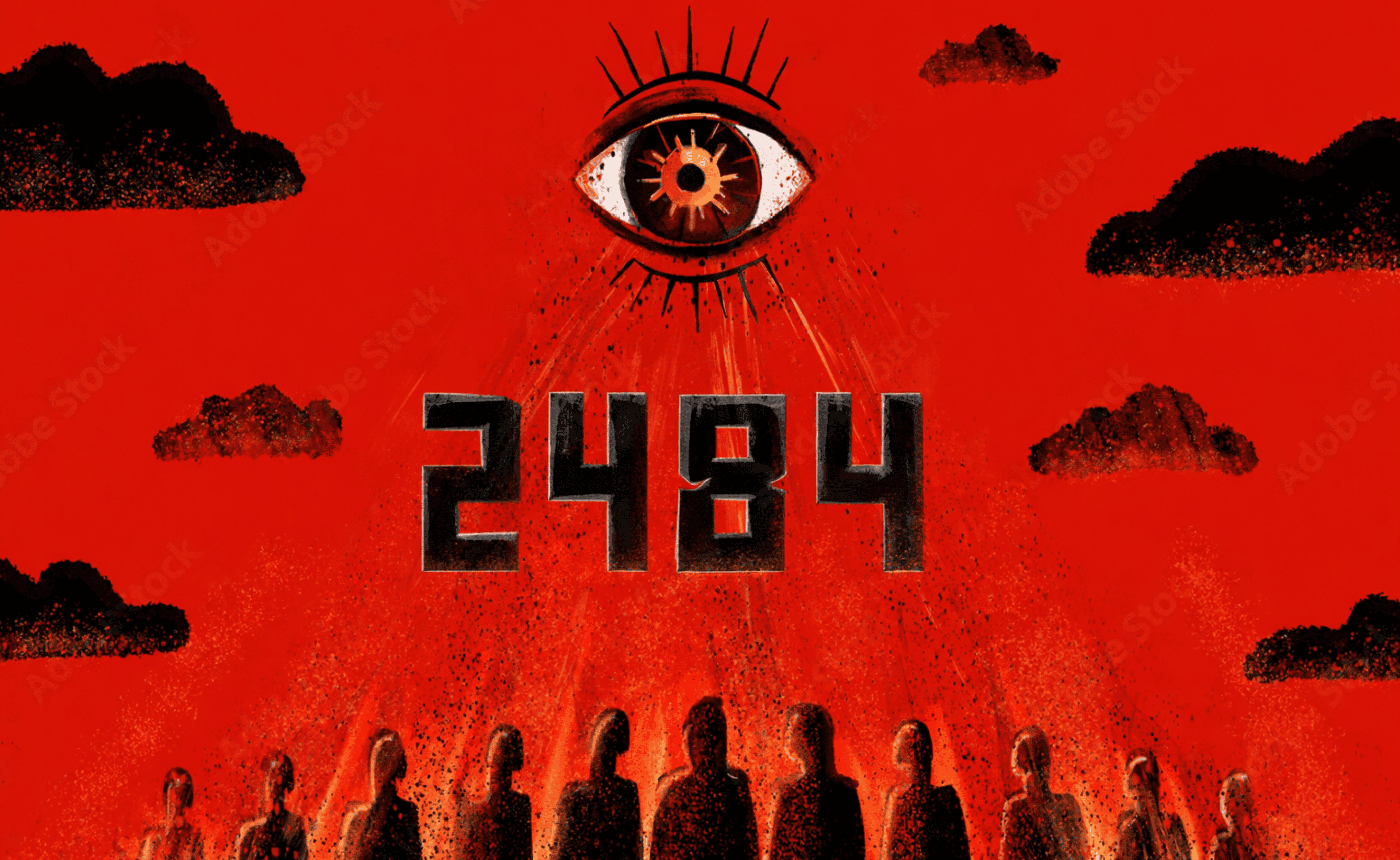
2484
2484
Drawing Parallels Between the Present and Orwell’s 1984 via an Interactive Game
History sometimes repeats itself. It’s 2026, and somehow, we may have circled back to a future that was already imagined decades ago. When George Orwell published 1984 in 1949, inspired by the totalitarian states during World War II, his vision felt extreme. Today, a lot of it feels a little too close to reality.
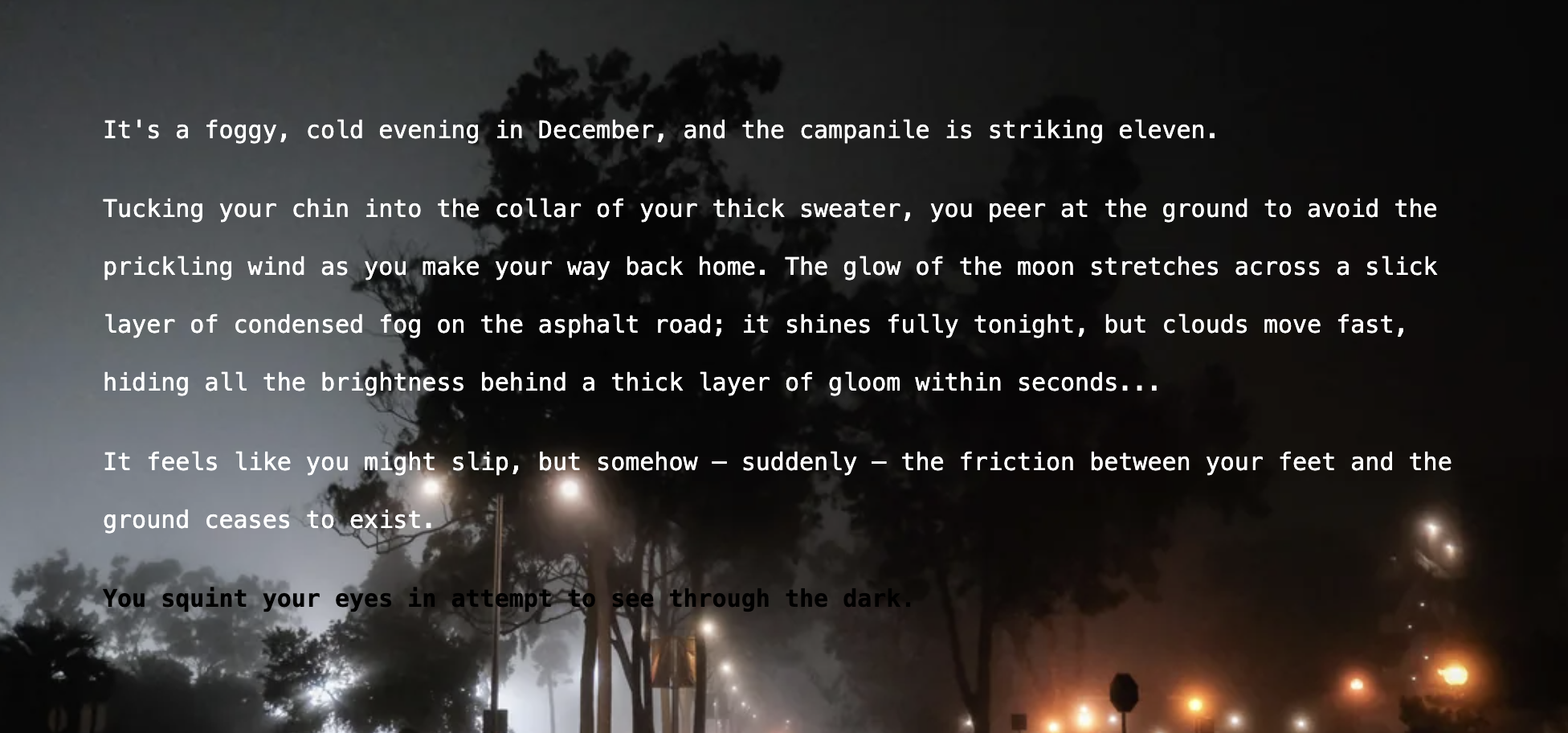
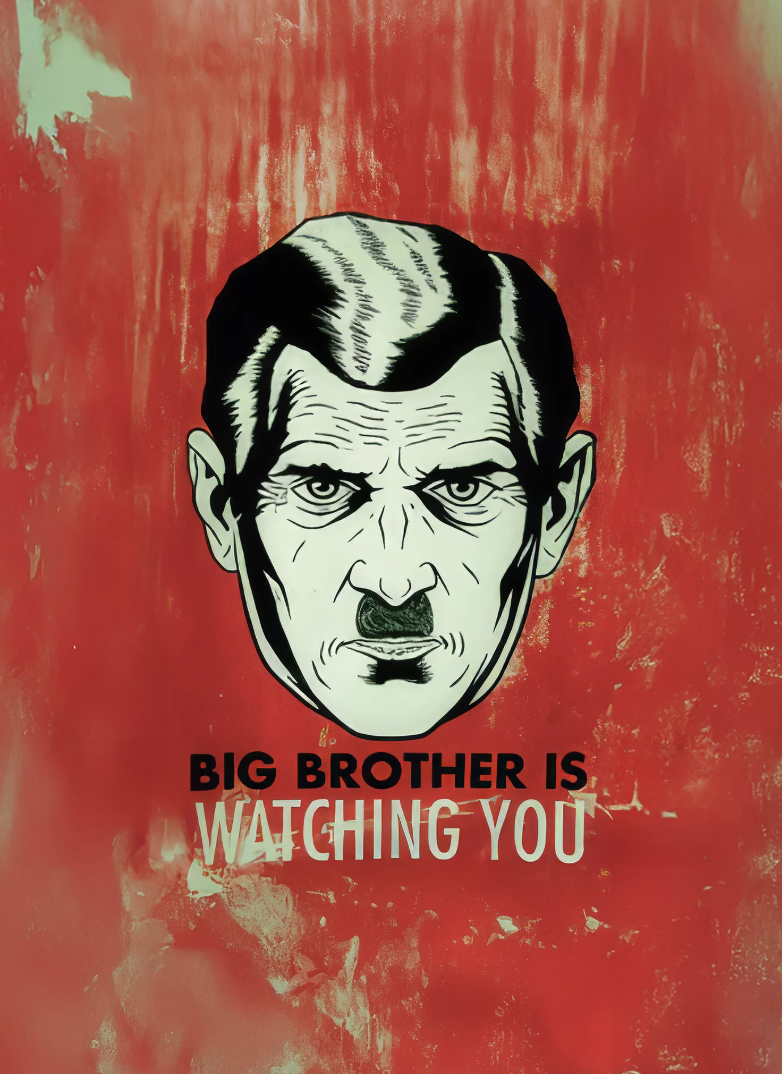
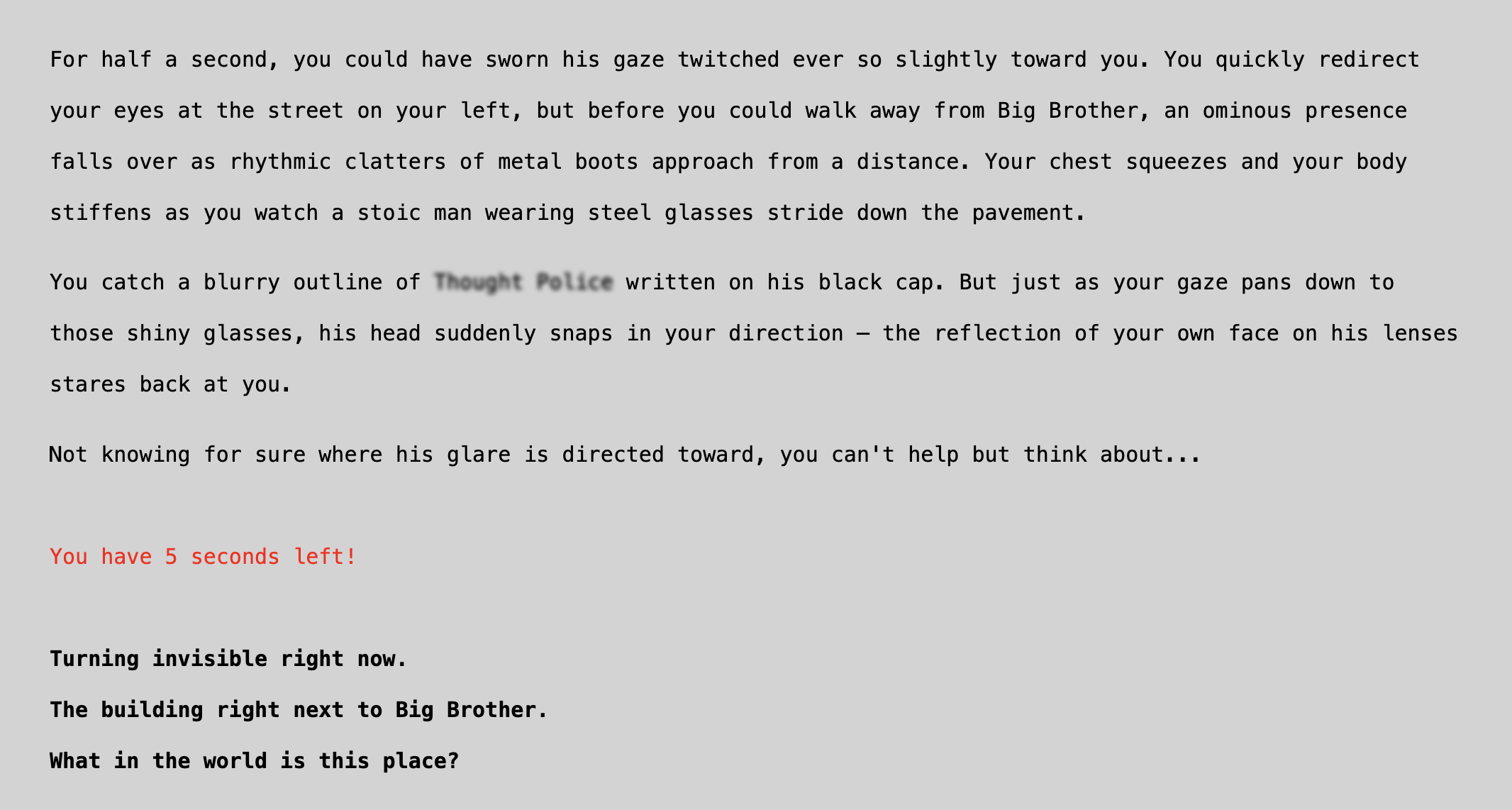
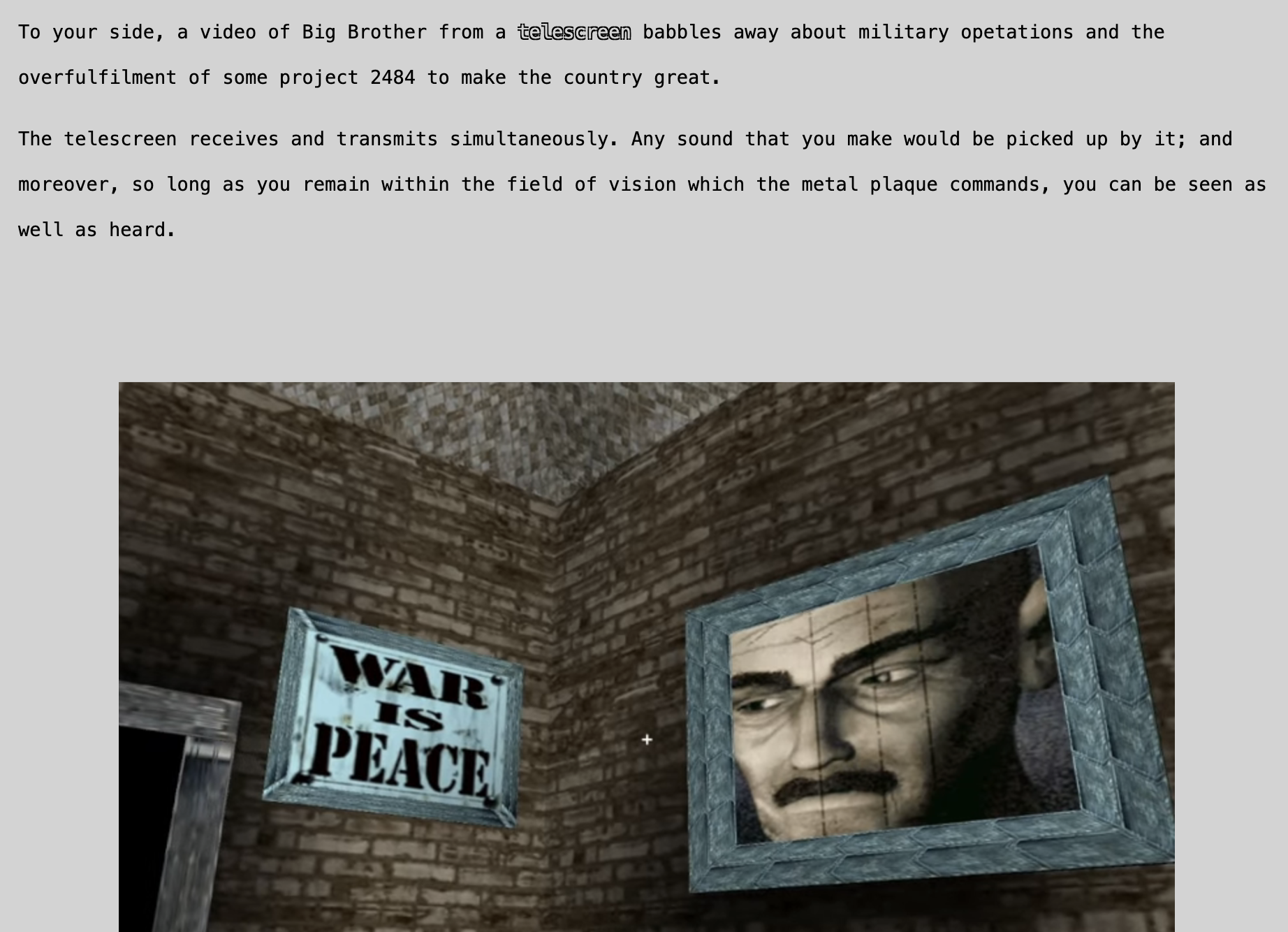
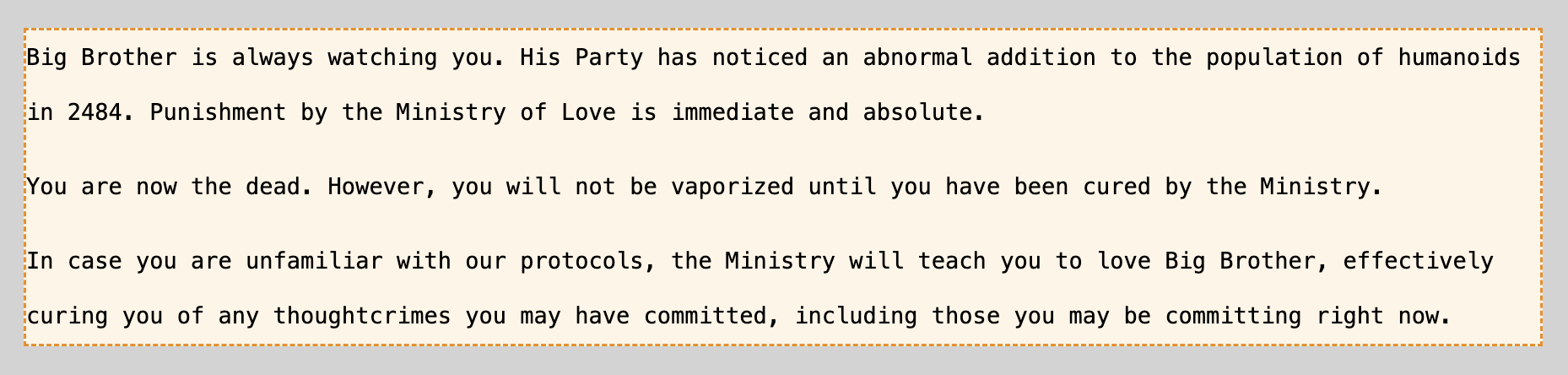
To reflect on the current state of our society, I developed 2484 as a text-based, Choose Your Own Adventure-style game using Twine. If you are allowed to make your own choices, you may wonder, how is this reflective of totalitarianism in 1984? Such interactivity can function as both a narrative tool and a means for story immersion. You are not subject to absolute control during the first portion of the game, but you will experience other aspects, such as constant surveillance and punishment for disobedient actions. Toward the end, you may or may not gradually conform to being an obedient citizen under Big Brother, accepting the benefits of and developing love for the regime.
2484 connects various points between 1984 and the present, exploring oppression and agency via an interactive form, at the end of which — I hope — one will begin to reflect on the world we live in today. Is our present slowly becoming a “1984” that we have passively accepted to live in?
Overview
As a dystopian world far into the future, 2484 was partially influenced by Orwell's 1984 and partially a reference to the story’s outline:
- 2 turns on a time turner. This is the mysterious object that transports you into the world of 2484, and may also serve to transport you back to the present, if you make all the “right” decisions. Spoiler: it is also an object all Thought Police and Party members possess, which may lead one to question, are such people traveling through time? Maybe to 2026?
- 4 special abilities to choose from: electrokinesis, magnetism, invisibility, and x-ray vision. I included these to twist the standard literature, in addition to creating a more evident feeling of playing an actual game. The player is able to use this ability in certain situations, sometimes leading to trouble and other times leading to escape.
- 8 ways to get in trouble. A variable called “betrayal” is set to track the total number of times you have rebellious thoughts or carry out rebellious actions. Near the end, if your betrayal score is too high (and depending on your previous series of choices) you may be led to face your biggest fear in Room 101.
- 4 possible endings. The one you get depends on the choices you make throughout the entire game; your depth of world exploration also depends on every small choice you make.
Leave a comment
Log in with itch.io to leave a comment.